
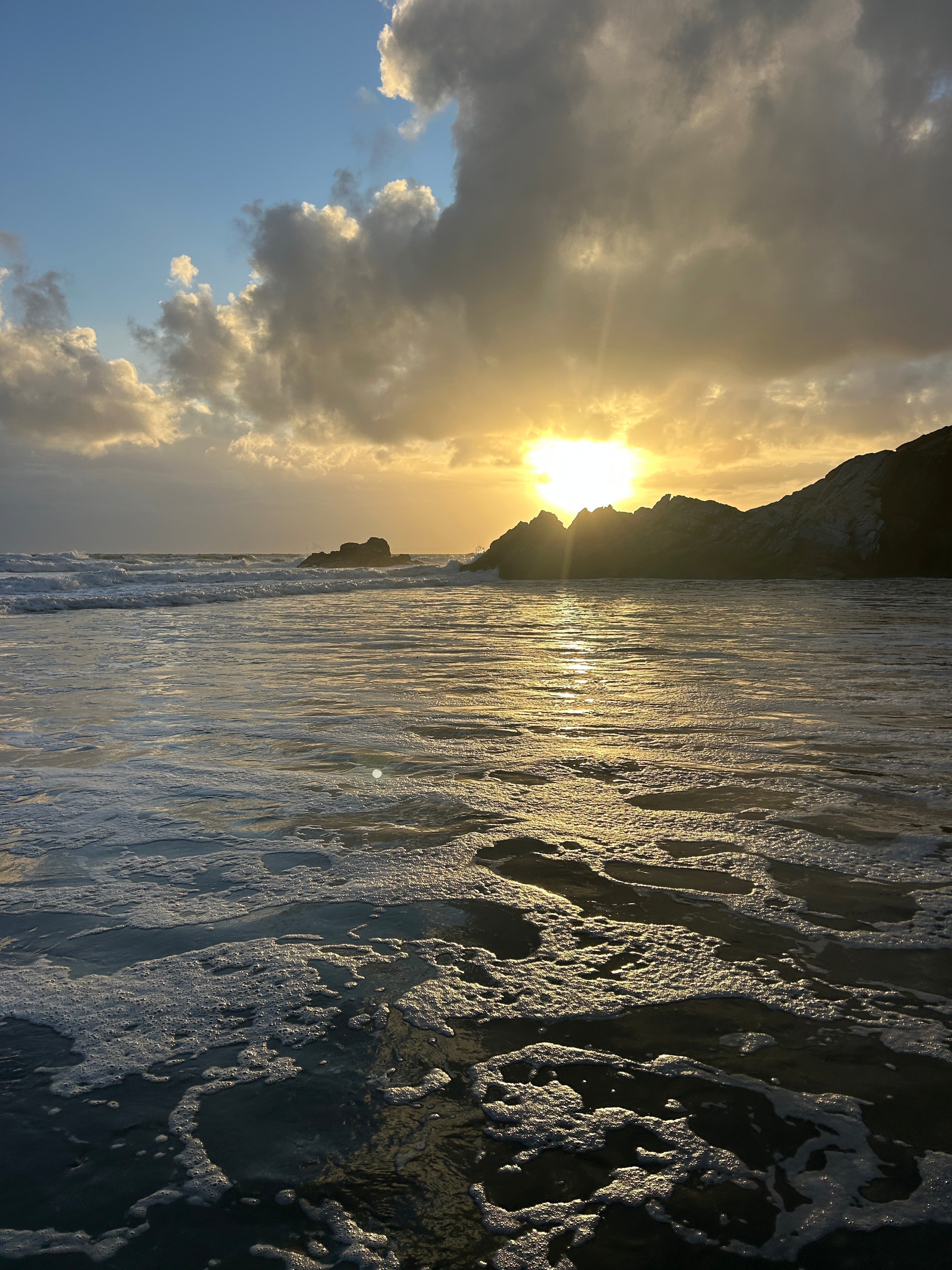
September is a month we look forward to for bass lure fishing in Cornwall. Shorter days and changing conditions give us plenty to think about, and watching the baitfish can be just as useful as watching the calendar.
It is not a guarantee of bigger bass or constant action. Some sessions are quiet; others come alive for a short spell. The aim is to recognise the water in front of you, choose a suitable presentation and learn which conditions work at your own marks.
Watch the baitfish, not just the month
Look for baitfish close to shore, birds working over the water and signs of bass feeding. Garfish, sandeels and other small fish can all influence the presentation you choose, but do not assume every September session calls for a long, silver lure.
Start with what you can see. If fish are feeding on top, try the surface. If there is no obvious activity, vary your depth and retrieve before deciding the mark is empty.
Learn the tide at your own mark
Moving water is worth paying attention to, especially around channels, weed edges and changes in depth. Watch how the flow affects your lure and adjust your casting angle so you can control the presentation.
There is no universal rule to fish west on the flood, east on the ebb or a fixed number of hours either side of high tide. Local geography changes the flow. Record the tide stage, water clarity, weather and where you found fish, then compare several visits rather than relying on one result.
Beaches, rocks, estuaries or bays?
On the open coast, look for accessible water where you can fish safely and keep a lure working effectively. Surf and swell may change the opportunities, but more movement is not automatically better, and rough conditions can make a mark unsafe.
Estuaries and sheltered bays give you alternatives when the exposed coast is unsuitable. Look for baitfish and manageable flow rather than assuming shelter will always mean fish. In either setting, check your access and exit route before committing to a spot.
Surface lures for working the top
Our 125mm / 19g surface bass lure is one option for covering the top of the water. For a more compact presentation, compare the 90mm / 16g Small Chap surface lure.
Try different retrieve speeds and pauses while watching the lure. A fast retrieve is not always the answer, and a slower presentation is not automatically better at night. Let the conditions and any response from fish guide your next change.
Shallow-diving hard lures
When you want to fish below the surface, compare our 125mm / 20g shallow-diving gliding lure, listed at 1m, with the Sub Surface Ranger, listed at 0.5m in 98mm and 118mm sizes.
The 120mm / 16g floating sub-surface runner is another option for shallow shoreline work. Choose enough clearance over the seabed and weed, and experiment with your retrieve.
Changing depth can help you explore water you have not covered. It does not mean larger bass will always be waiting below smaller surface-feeding fish.
Sinking pencils and casting jigs
The 80mm / 18g Small Sprat Surf Pencil is slow-sinking, not a floating surface lure. Allow for that when choosing where and how to fish it.
For a metal option, the Seadra Aqua-Bullet casting jig can be worked with a sink-and-draw retrieve where depth and seabed allow, or vertically from a boat. Select a weight within your rod’s casting range and stay in contact as the lure falls.

Soft plastics for changing the presentation
Soft plastics let you experiment with a different profile, retrieve and depth. Our Split Shad sets and Spindle Paddletail sets offer weighted and weightless setups. Check the selected size, hook and total rigged weight rather than treating every option as the same lure.
Change one thing at a time. Try a slower or faster retrieve, a pause or a different depth before switching everything in the box. Weedless rigging can help around weed, but does not make a lure snag-proof.
Cornish Snax by day or night
Our handmade 5-inch Cornish Snax are one of the soft-plastic options we have used in these sessions. Compare the weighted and weightless setups and start with a controlled, steady retrieve, adjusting to the depth and flow.

White, dark and natural colours give you different options to experiment with. Moonlight and water clarity are worth noting, but neither gives you a guaranteed colour choice. Check the current colour options on the product page.


Hard-lure sessions in Norfolk and Cornwall
The original examples below feature Mark Aston in Norfolk and Edy B in Cornwall. The linked options are the Sub Surface Ranger and floating sub-surface runner. Use these as ideas to explore, not a promise of the same result at a different mark.


Exploring the estuary
When the open coast is not producing, an estuary may offer a different session. Watch for baitfish, current seams and weed edges, and fish the nearshore water before considering a longer cast or wading.
We have enjoyed fishing our supersoft paddletail lure sets in estuaries. Choose the size and rigging weight to suit the mark, and try a slow, steady retrieve while keeping control of the lure.

The 5-inch handmade Cornish Worm sets offer another presentation to compare. Experiment with pauses and different depths, and check the available weighted or weightless setup before buying.

A compact surface option such as the Small Chap 90mm / 16g gives you a way to explore above the weed where conditions allow.

For a paddletail alternative, compare our Soft Shad Bass Lure Sets, 18g with the Spindle Paddletail sets. The soft shad listing includes natural and brighter colour options; choose the current mix on the product page.


Prepare for shorter days and safer sessions
Check the forecast, tide, access and exit route before you set off. Calm seas do not automatically make night fishing safer: darkness adds hazards, especially on rocks, soft estuary ground and unfamiliar routes.
Carry a reliable headtorch and backup light, use them whenever needed, and consider fishing with a mate. Let someone know your plans. Check your braid for wear, inspect knots and hooks, and set the drag to suit your complete tackle setup rather than a fixed percentage.
Make each September session useful
Keep a simple record of tide stage, conditions, lure and retrieve, including the quiet sessions. Over time, it will tell you more about your local fishing than a blanket rule about a month, moon phase or colour.
Pick a manageable selection of lures, watch the water and enjoy the time outdoors. A September session does not have to produce a personal best to teach you something worth taking into the next trip. Tight lines!
1 comment
Jamie Jackson
I’ve just started lure fishing, not catching anything 🫣 it so difficult. Thinking of getting a bait setup aswell. Great blog