
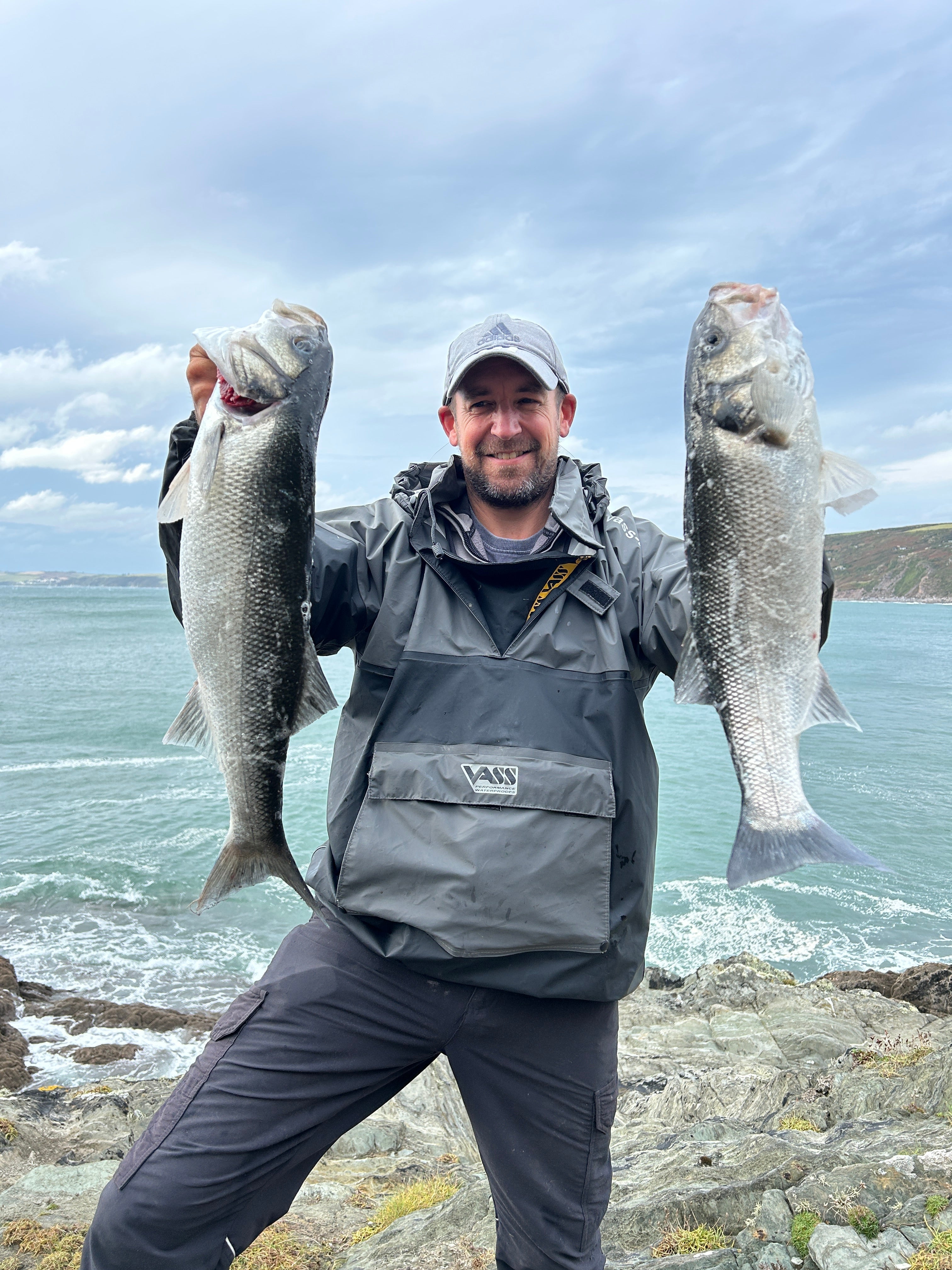
Thorns in my clothes, salt water in my boots and a huge smile: that is how I remember returning from one unforgettable session with my mate Steve. Sharing the catches, lending each other tackle and laughing about it afterwards made the day special.
But it was not simply an advert for persevering until you find fish. We also made decisions about access, landing and the rising tide that deserve an honest look. Having a friend beside you does not make a hazardous mark safe.
A windy start and a route that did not work
We set out in a south-easterly wind reported at around 30 knots, and I was not keen. Our first venue was weedy and too exposed to fish effectively. We turned back rather than stay there.
While walking back up the cliff, we talked about a more sheltered spot. Steve remembered a path from around five years earlier, so we tried it. Ferns and trees had taken over, the ground was steep, and we could not find a suitable way down to the water. We had to climb back up and take a breather.
That part of the outing is not a route-finding tip to copy. An old memory is not confirmation of current access. If a route is unclear, overgrown or beyond your ability, turn back. Stopping altogether would have been a reasonable decision, not a failed fishing trip.

A pause before the first fish
We tried another route to a third venue, where there was still some south-easterly swell. A sheltered-looking corner is not automatically safe: swell, footing, tide and the way back all need assessing before fishing.
After around ten to fifteen casts without a take, I tried a brighter lure in the cloudy water, also without success. Then I stopped for a coffee from Cornish roastery Yallah. I do love my coffee, and a breather gave me a chance to reassess rather than keep making the same cast.
A Snow White sandeel and a 50cm bass
I clipped on a 140mm / 27g Weighted Sandeel in Snow White and cast towards the direction of the swell. This time a bass took, and I called across to Steve: “Yeah buddy, I’m in!” The fish measured 50cm.
The lure change coincided with our first catch. That made it worth trying again, but did not prove that white was the only effective colour or explain exactly why the fish took.

Sharing the lure and the moment
“You got another one of those in your bag?” Steve asked. Of course I did. He borrowed one, tried the same retrieve and hooked a fish that took plenty of line.
I held his rod while he climbed down and lifted the fish from the rocks. That was what happened, not a landing method to recommend. Helping with a rod does not make climbing towards the water safe. A suitable landing position and equipment should be planned before the first cast, without needing to move into exposed or wave-washed ground.

I was chuffed for him. He had struggled on a previous outing while I caught fish, and it was brilliant to share his turn.

We cast again. I caught a smaller bass and returned it, then Steve hooked another close to his feet. Once again I held the rod while he lifted the fish. The excitement was real, but repeating that landing approach did not remove its risks.
We used our Open Water Rod & Reel Combos during the session. That is part of the tackle account, not a claim that a particular combo makes difficult landings safe.

Steve was having a memorable spell, and we took photographs to remember it.

The rising tide was the warning we should have anticipated
As the tide pushed up, swell washed onto the rocks more than once. We then realised the position was a low-water mark and that the route could be cut off. We moved up and away.
That was a warning about our planning, not evidence that two anglers can safely stay longer. We should have identified the tidal cut-off and left with a clear margin, before water reached the position. A companion can help you notice a problem, but cannot guarantee that either of you will spot it in time.
Before fishing a coastal mark, check the forecast, tide and swell, understand the exit route and agree when to leave. Keep reassessing as conditions change. Do not wait for waves to reach your footing before deciding to stop.
Why the company still mattered
Once we had moved away from the water, we stopped and took it all in. Two good mates, a few memorable fish and plenty to talk about. That shared moment remains the part I value most.

When preparing a fish we had kept, we examined its stomach contents and wondered whether our lure resembled the prey. It was an interesting clue, not proof of why the lure worked. Fish being plentiful during a session is also not a reason on its own to retain one: check the current official rules for your location and date.

Fishing with a friend offers company, shared learning and someone to celebrate with. It should also make it easier to agree that a route, mark or landing is not suitable, and go home. No catch is worth either person taking a dangerous risk.
Take care and tight lines.