
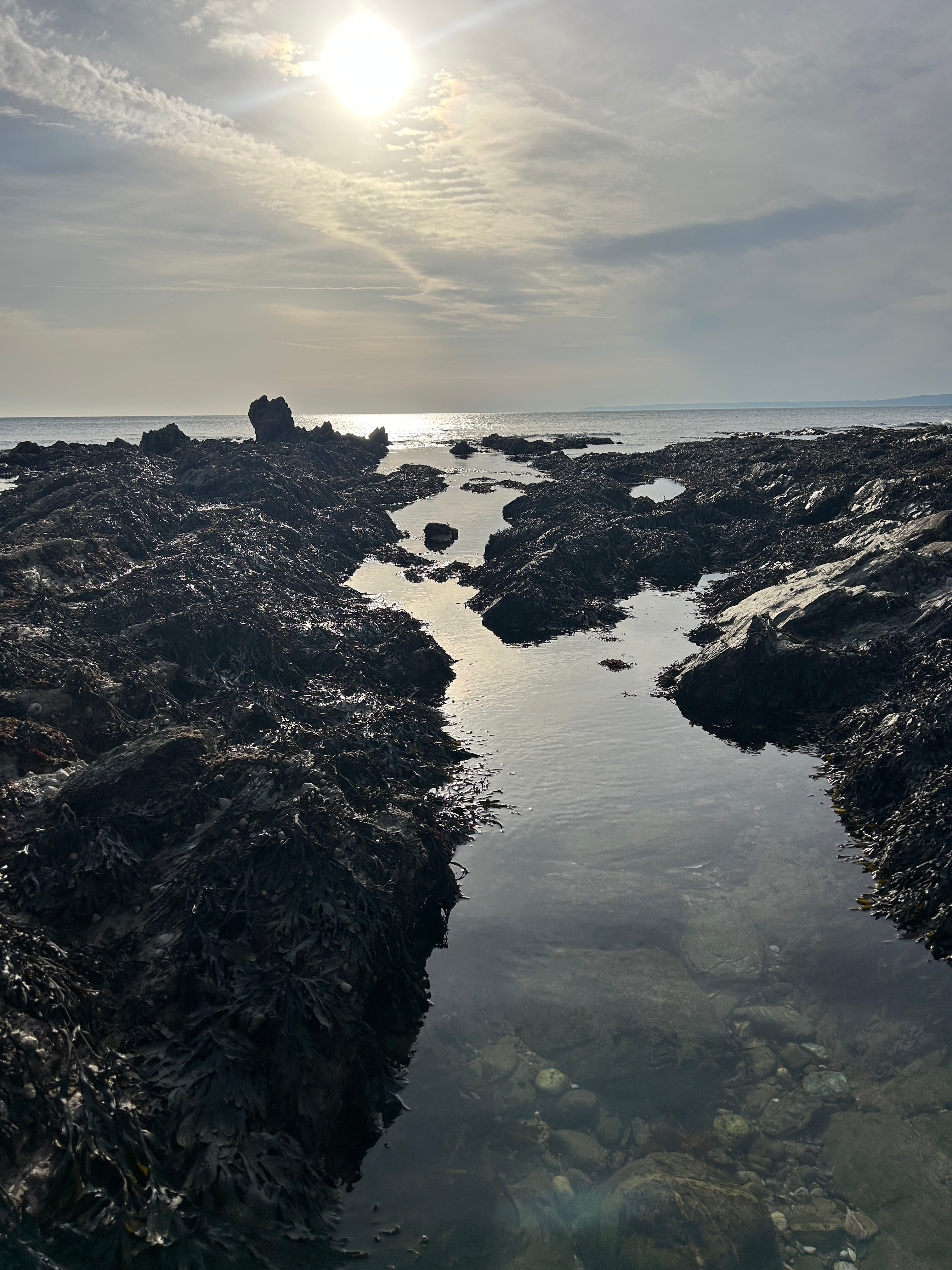
After years of looking for good bass fishing around Cornwall, we have learned to value both estuaries and the open coast. Neither offers the perfect answer for every tide, season or weather forecast.
There are days when we want to explore a beach or coastal mark, and others when an estuary gives us a different way to fish. Learning both has been more useful than deciding one must always produce better results.
Start with the mark, not the category
“Estuary” and “open coast” cover very different places. A sheltered-looking river bank can have soft mud, strong currents and a route that disappears on the tide. A beach can change quickly with swell, while a rock mark may leave you without a safe landing position.
Choose somewhere you can access, fish and leave safely throughout the session. Then consider the water depth, flow, weed and signs of baitfish. Neither setting guarantees larger bass or an easier day.

What we enjoy about estuary fishing
Estuaries give us margins, channels, weed edges and changes in flow to investigate. At suitable marks, it is possible to cover interesting water without a long cast or stepping off the bank.
Some areas offer shelter from particular wind directions, and we have enjoyed fishing them through different seasons. That is a reason to learn the local conditions, not a promise of year-round catches or protection from every forecast.
Take time to watch the current and the water close to shore. A near-bank cast may tell you more than immediately trying to reach the deepest part of a channel.
For more detail on quiet approaches, retrieves and reading the tide, see our 10 practical tips for estuary bass fishing.
Estuary challenges
Loose weed can collect on the line, while shallow or snaggy ground can make some presentations difficult. Changes in flow may also affect whether you can control the lure.
Soft mud, steep banks, strong currents and tidal cut-offs need careful assessment. Do not wade into unfamiliar ground or assume calm-looking water means safe access.
What we enjoy about the open coast
Beaches, coves and coastal marks offer different water to explore. Depending on the venue, you may find shallow surf, deeper water close in or features that let you compare several lure presentations.
We enjoy watching how the water changes around these features and looking for baitfish activity. But more surf, deeper water or a larger tide does not automatically mean better fishing.
Coastal challenges
Wind, swell, breaking waves and rising water can make an apparently promising position unsuitable. Weed and snags can also be a problem, and not every lure will work effectively over the ground in front of you.
Plan how you would land and release a fish before casting. Do not climb towards waves, lean over an exposed edge or follow a hooked fish into danger. If the position or exit is uncertain, move or leave.

Lures that can cross between both settings
You do not necessarily need separate tackle boxes for estuary and coastal fishing. Start with the depth, current, casting requirements and presentation, then decide whether the same lure can cover both jobs.
Surface lures
Our surface bass lures give you options for exploring the top of the water. Compare sizes and actions, and choose one you can control in the wind and flow rather than assuming a surface lure suits every mark.
Soft plastics
The soft plastic bass lure sets include different profiles, sizes and rigging options. Check the total rigged weight and whether the selected setup is weighted or weightless.
Weedless rigging can be useful around weed, but does not make a lure snag-proof. Adjust the retrieve and depth if you are repeatedly touching bottom or getting stuck.
How we choose between the two
At one stage we described our fishing as roughly 60% estuary and 40% open coast. That was a snapshot of our habits, not a target to copy. Available time, weather and the marks we could fish effectively shaped the balance.
We have often enjoyed coastal sessions in summer and estuary fishing in winter, with quieter spells in late winter and early spring. Local conditions vary, so use those observations as ideas to test rather than a fixed seasonal plan.
Before choosing a venue, ask yourself: can I get there and leave safely, what will the tide change, what water can I cover, and how would I land a fish?
Explore thoughtfully and keep records
A daylight walk can help you notice potential features and access routes, but assess them again under the conditions you intend to fish. Respect access restrictions, other shore users and your own experience limits.
Keep notes on the tide stage, weather, clarity, baitfish, lure and retrieve, including blank sessions. Comparing visits to both settings will teach you more than assuming one type of water is always best.
Our recommendation is to learn a manageable selection of safe local marks in both environments. Give yourself options when conditions change, and choose the session that fits the day rather than chasing a promise of a bigger bass. Tight lines!